
Good User Reputation for Polycarbonate Eyeglasses - 1.67 MR-7 FSV High Index HMC optical lenses – Boris

Good User Reputation for Polycarbonate Eyeglasses - 1.67 MR-7 FSV High Index HMC optical lenses – Boris Detail:
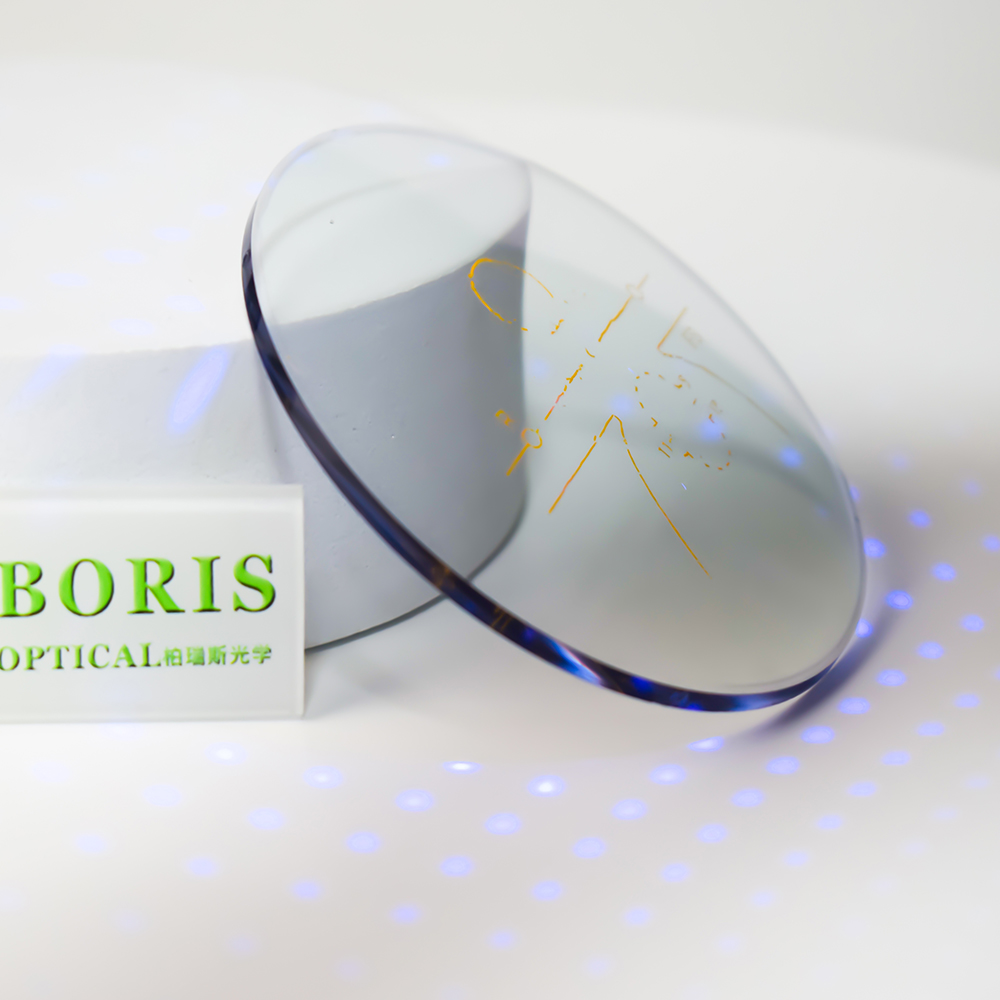
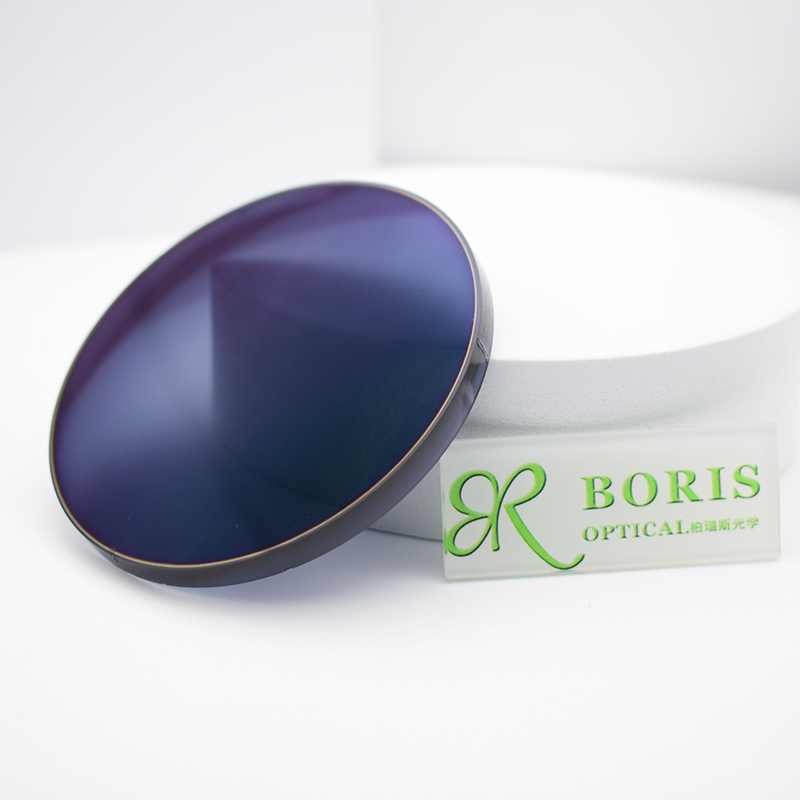
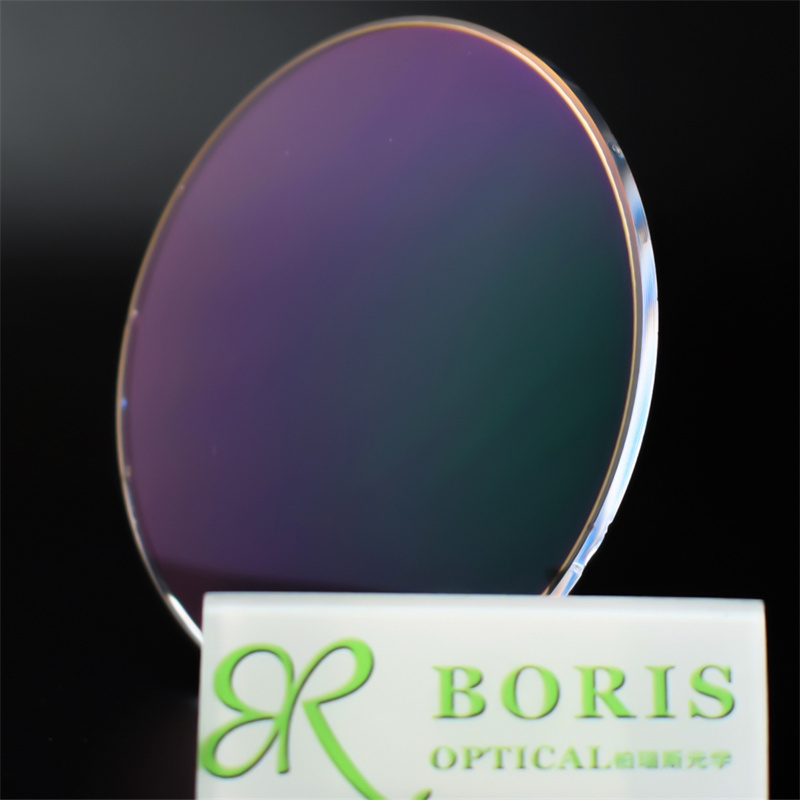
Production Details
| Place of Origin: | Jiangsu | Brand Name: | BORIS |
| Model Number: | High Index Lens | Lenses Material: | MR-7 |
| Vision Effect: | Single Vision | Coating Film: | UC/HC/HMC/SHMC |
| Lenses Color: | White(indoor) | Coating Color: | Green/Blue |
| Index: | 1.67 | Specific Gravity: | 1.35 |
| Certification: | CE/ISO9001 | Abbe Value: | 32 |
| Diameter: | 80/75/70/65mm | Design: | Asperical |
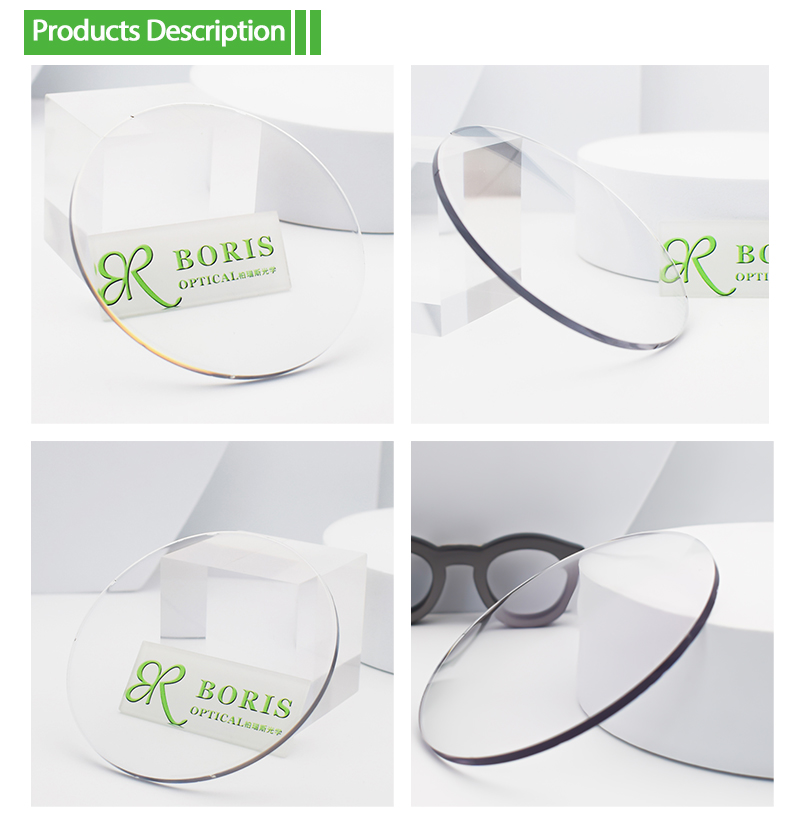
MR-7 is generally used to make high-level lenses, with a refractive index of 1.677. Enjoy better visual quality than ever, even with height numbers. Compared to traditional lenses, the MR-7 is thinner and safer. MR-7 is also a material with better dyeing effect at present. Some colored lenses and myopia sunglasses are the best choice for this material.
Production Introduction
The refractive index of MR-7 and MR-10 materials reaches 1.67, and the production of high-level lenses is lighter and thinner. The thermal deformation temperature of MR-7 is 85 degrees, and that of MR-10 is 100 degrees. Both MR-7 and MR-10 are 1.67 refractive index lens materials. MR-7 is easier to dye than MR-10, so MR-7 is more suitable for myopia sunglasses, or fashion lenses. MR-10 lenses have higher hardness, better high temperature resistance, and higher processability. They are often used in workshops and custom lens processing.
Most of today’s spectacle lenses are based on resin lenses. Generally, in the case of poor heat resistance, the film on the surface of the lens will crack, which is caused by thermal expansion. Compared with the reflective film of the lens, the degree of thermal expansion of the base material is serious, and the degree of thermal expansion of the reflective film and the base material is different, and the film crack will occur.
Based on this consideration, MR-10 avoided this problem from the beginning of material design, and through continuous improvement, became a material with good heat resistance and low thermal expansion coefficient.
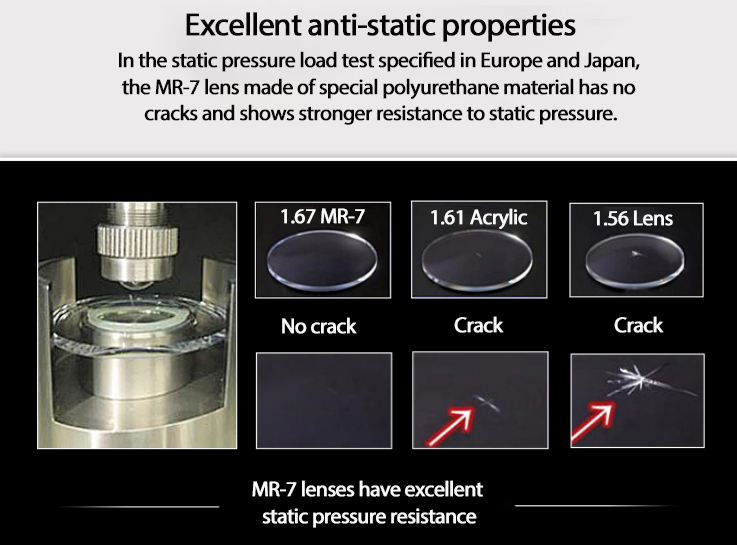
First, as the temperature increases, the thermal expansion coefficient tends to increase, but the thermal expansion coefficient of MR-10 is 25% smaller than that of general 1.67 materials. Compared with the general 1.67 material, MR-10 has less thermal expansion, is not prone to cracks, and is relatively less affected by heat.
Second, when the temperature is 95°C, a large number of cracks appear on the conventional 1.67 lens, while the MR-10 is completely unaffected.
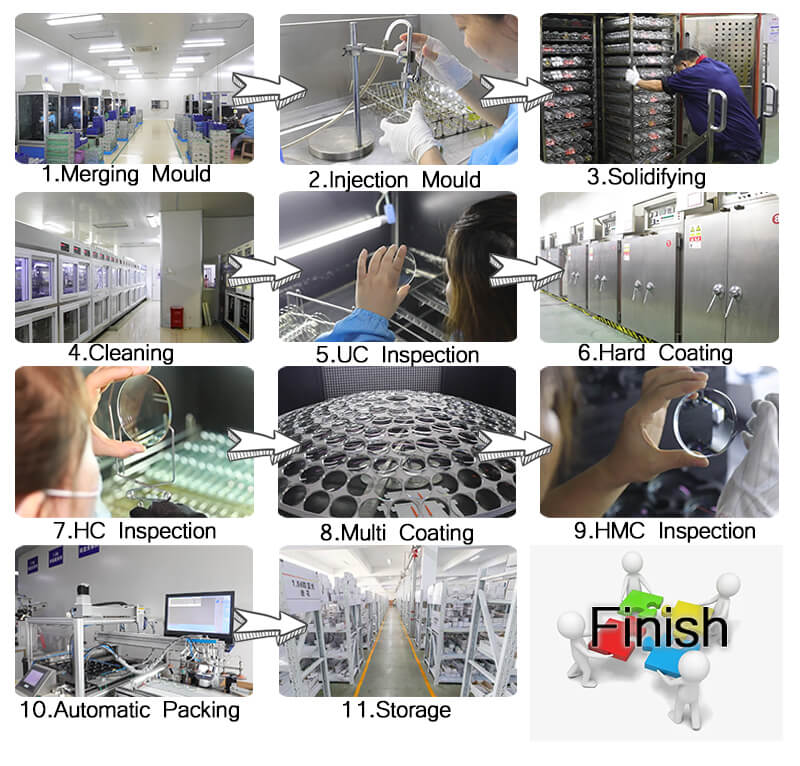
Product Process
Product Video
Product detail pictures:


Related Product Guide:
We've got a really efficient group to deal with inquiries from prospects. Our purpose is 100% customer fulfillment by our product excellent, price & our group service and enjoy a superb track record amid clientele. With many factories, we can easily deliver a wide selection of Good User Reputation for Polycarbonate Eyeglasses - 1.67 MR-7 FSV High Index HMC optical lenses – Boris , The product will supply to all over the world, such as: San Francisco, Canada, Detroit, We have been persisting in the business essence Quality First, Honoring Contracts and Standing by Reputations, providing customers with satisfying goods and service. Friends both at home and abroad are warmly welcome to establish everlasting business relations with us.
 By Lauren from Swansea - 2018.02.21 12:14
Goods just received, we are very satisfied, a very good supplier, hope to make persistent efforts to do better.
By Poppy from French - 2018.06.28 19:27
-
Factory Free sample Blue Lens Glasses For Compu...
-
Good quality Photochromic Driving Glasses - 1....
-

OEM Customized Progressive Lens - 1.56 Single ...
-
OEM Supply Blue Lenses - 1.56 Blue cut Progres...
-
Top Quality Photochromic Eyeglasses - 1.56 FSV...
-
Factory wholesale Glasses Vision - 1.71 Single...