
Quality Inspection for 1.59 Polycarbonate - 1.67 MR-7 FSV High Index HMC optical lenses – Boris

Quality Inspection for 1.59 Polycarbonate - 1.67 MR-7 FSV High Index HMC optical lenses – Boris Detail:
Production Details
| Place of Origin: | Jiangsu | Brand Name: | BORIS |
| Model Number: | High Index Lens | Lenses Material: | MR-7 |
| Vision Effect: | Single Vision | Coating Film: | UC/HC/HMC/SHMC |
| Lenses Color: | White(indoor) | Coating Color: | Green/Blue |
| Index: | 1.67 | Specific Gravity: | 1.35 |
| Certification: | CE/ISO9001 | Abbe Value: | 32 |
| Diameter: | 80/75/70/65mm | Design: | Asperical |
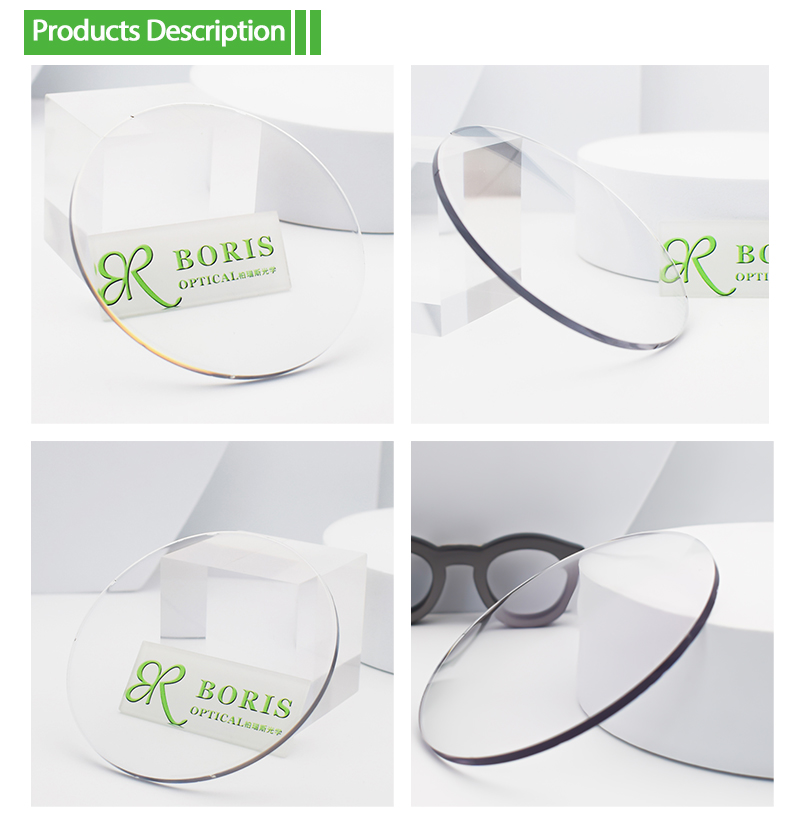
MR-7 is generally used to make high-level lenses, with a refractive index of 1.677. Enjoy better visual quality than ever, even with height numbers. Compared to traditional lenses, the MR-7 is thinner and safer. MR-7 is also a material with better dyeing effect at present. Some colored lenses and myopia sunglasses are the best choice for this material.
Production Introduction
The refractive index of MR-7 and MR-10 materials reaches 1.67, and the production of high-level lenses is lighter and thinner. The thermal deformation temperature of MR-7 is 85 degrees, and that of MR-10 is 100 degrees. Both MR-7 and MR-10 are 1.67 refractive index lens materials. MR-7 is easier to dye than MR-10, so MR-7 is more suitable for myopia sunglasses, or fashion lenses. MR-10 lenses have higher hardness, better high temperature resistance, and higher processability. They are often used in workshops and custom lens processing.
Most of today’s spectacle lenses are based on resin lenses. Generally, in the case of poor heat resistance, the film on the surface of the lens will crack, which is caused by thermal expansion. Compared with the reflective film of the lens, the degree of thermal expansion of the base material is serious, and the degree of thermal expansion of the reflective film and the base material is different, and the film crack will occur.
Based on this consideration, MR-10 avoided this problem from the beginning of material design, and through continuous improvement, became a material with good heat resistance and low thermal expansion coefficient.
First, as the temperature increases, the thermal expansion coefficient tends to increase, but the thermal expansion coefficient of MR-10 is 25% smaller than that of general 1.67 materials. Compared with the general 1.67 material, MR-10 has less thermal expansion, is not prone to cracks, and is relatively less affected by heat.
Second, when the temperature is 95°C, a large number of cracks appear on the conventional 1.67 lens, while the MR-10 is completely unaffected.
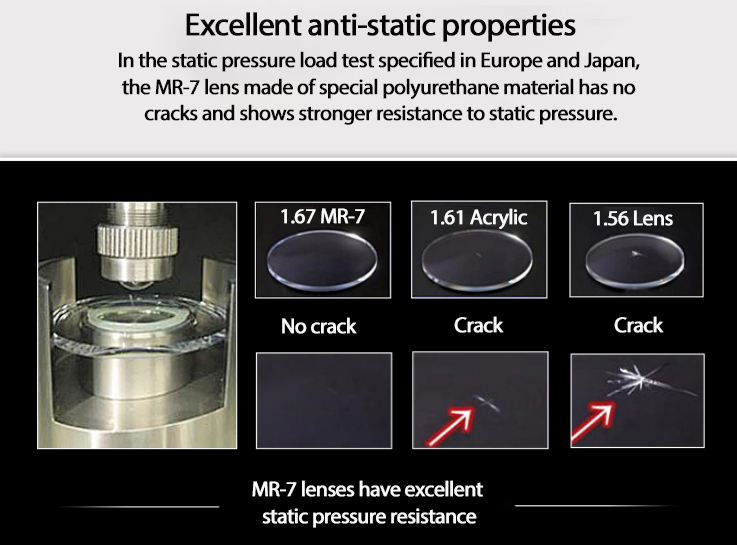
Product Process
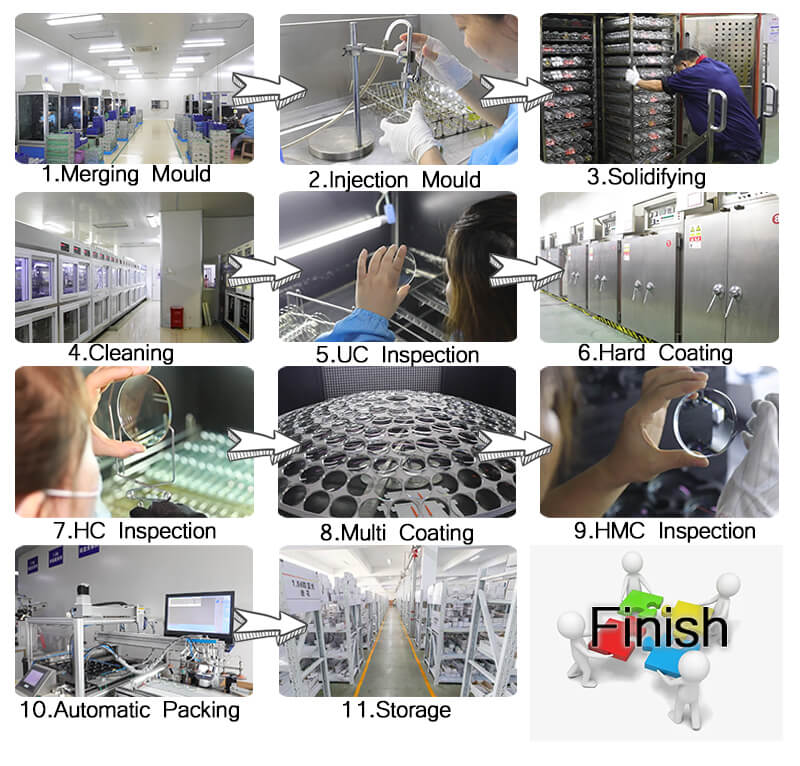
Product Video
Product detail pictures:


Related Product Guide:
Our solutions are widely regarded and trustworthy by consumers and may meet continually modifying financial and social requirements for Quality Inspection for 1.59 Polycarbonate - 1.67 MR-7 FSV High Index HMC optical lenses – Boris , The product will supply to all over the world, such as: Algeria, USA, Angola, Our products are mainly exported to Southeast Asia, the Middle East, North America and Europe. Our quality is surely guaranteed. If you are interested in any of our products or would like to discuss a custom order, please feel free to contact us. We are looking forward to forming successful business relationships with new clients around the world in the near future.
 By Pamela from Berlin - 2018.09.23 17:37
We are a small company that has just started, but we get the company leader's attention and gave us a lot of help. Hope we can make progress together!
By Gill from Malta - 2018.06.09 12:42
-

Big discounting High Index Transition Lenses -...
-
professional factory for Photochromic Lenses Co...
-
Factory directly Progressive Vision Lenses - 1...
-
Good quality Photochromic Driving Glasses - 1....
-

Reliable Supplier Progressive Eye Prescription ...
-

OEM/ODM Factory Polycarbonate Sunglasses Means ...