

Rapid Delivery for Have Transition Lenses Improved - 1.67 MR-7 FSV High Index HMC optical lenses – Boris

Rapid Delivery for Have Transition Lenses Improved - 1.67 MR-7 FSV High Index HMC optical lenses – Boris Detail:
Production Details
| Place of Origin: | Jiangsu | Brand Name: | BORIS |
| Model Number: | High Index Lens | Lenses Material: | MR-7 |
| Vision Effect: | Single Vision | Coating Film: | UC/HC/HMC/SHMC |
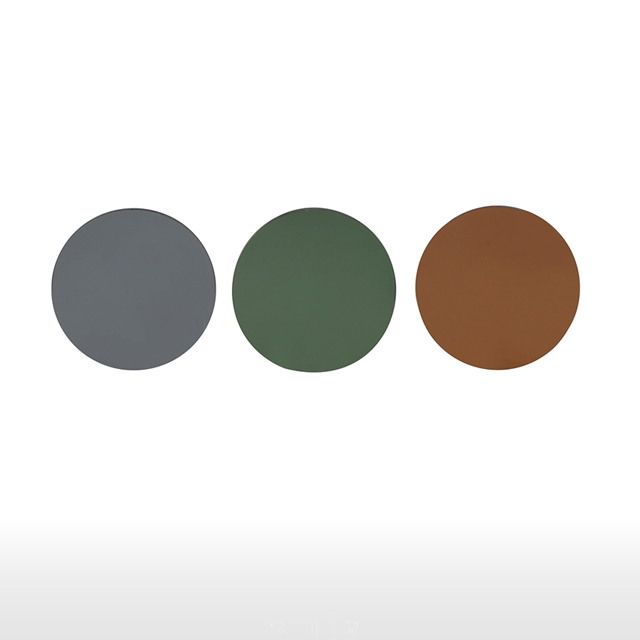
| Lenses Color: | White(indoor) | Coating Color: | Green/Blue |
| Index: | 1.67 | Specific Gravity: | 1.35 |
| Certification: | CE/ISO9001 | Abbe Value: | 32 |
| Diameter: | 80/75/70/65mm | Design: | Asperical |
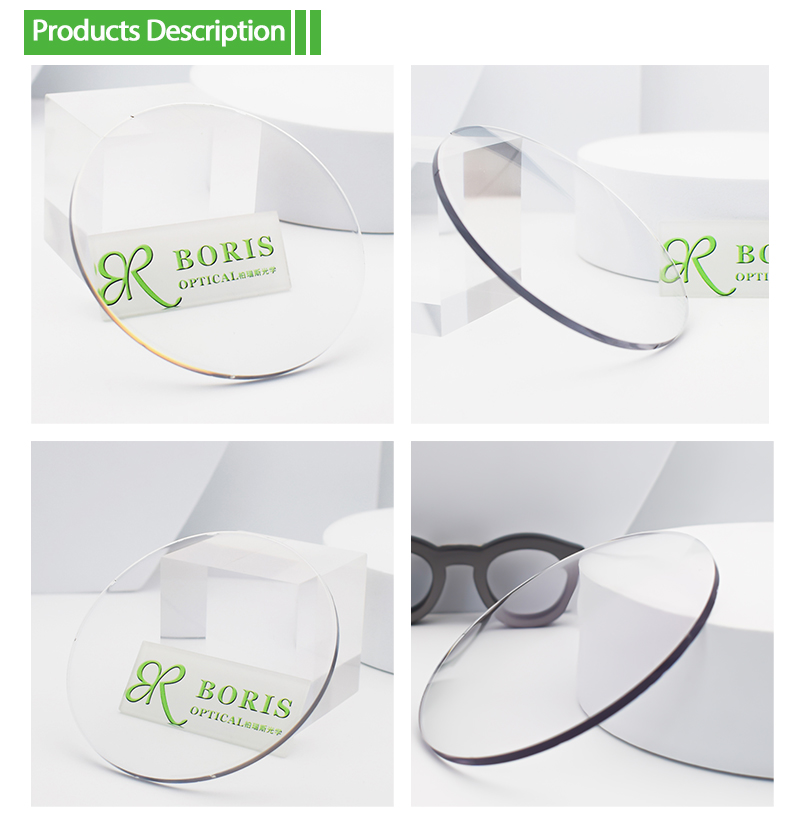
MR-7 is generally used to make high-level lenses, with a refractive index of 1.677. Enjoy better visual quality than ever, even with height numbers. Compared to traditional lenses, the MR-7 is thinner and safer. MR-7 is also a material with better dyeing effect at present. Some colored lenses and myopia sunglasses are the best choice for this material.
Production Introduction
The refractive index of MR-7 and MR-10 materials reaches 1.67, and the production of high-level lenses is lighter and thinner. The thermal deformation temperature of MR-7 is 85 degrees, and that of MR-10 is 100 degrees. Both MR-7 and MR-10 are 1.67 refractive index lens materials. MR-7 is easier to dye than MR-10, so MR-7 is more suitable for myopia sunglasses, or fashion lenses. MR-10 lenses have higher hardness, better high temperature resistance, and higher processability. They are often used in workshops and custom lens processing.
Most of today’s spectacle lenses are based on resin lenses. Generally, in the case of poor heat resistance, the film on the surface of the lens will crack, which is caused by thermal expansion. Compared with the reflective film of the lens, the degree of thermal expansion of the base material is serious, and the degree of thermal expansion of the reflective film and the base material is different, and the film crack will occur.
Based on this consideration, MR-10 avoided this problem from the beginning of material design, and through continuous improvement, became a material with good heat resistance and low thermal expansion coefficient.
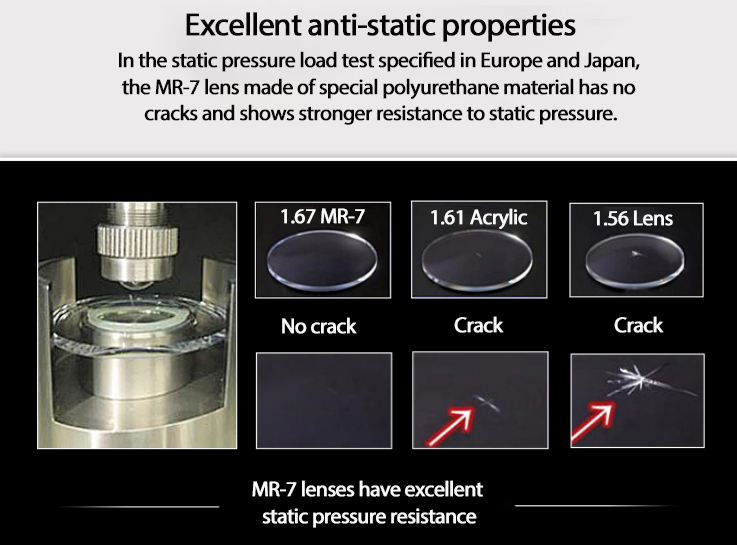
First, as the temperature increases, the thermal expansion coefficient tends to increase, but the thermal expansion coefficient of MR-10 is 25% smaller than that of general 1.67 materials. Compared with the general 1.67 material, MR-10 has less thermal expansion, is not prone to cracks, and is relatively less affected by heat.
Second, when the temperature is 95°C, a large number of cracks appear on the conventional 1.67 lens, while the MR-10 is completely unaffected.
Product Process
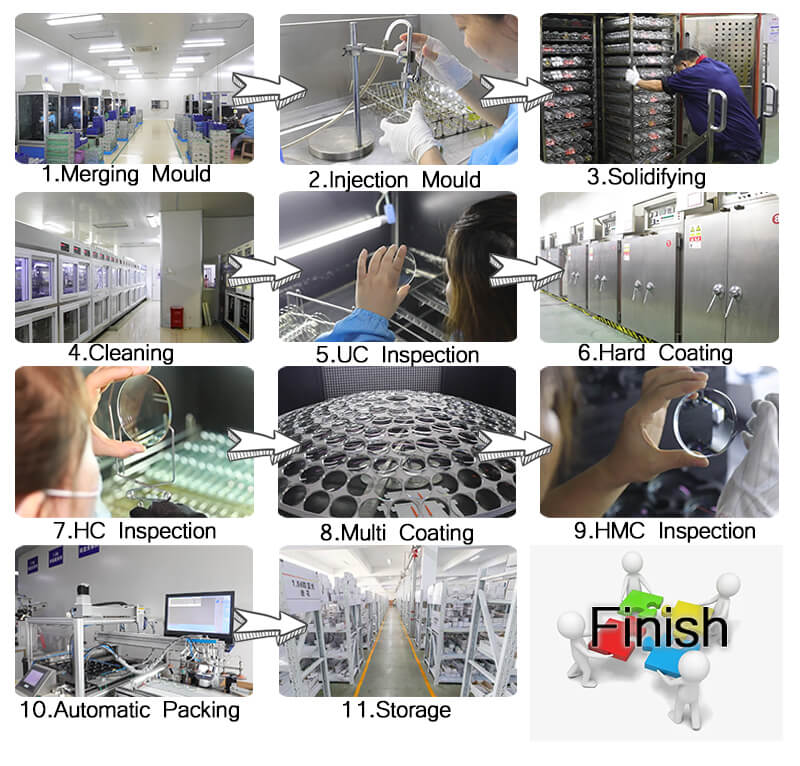
Product Video
Product detail pictures:


Related Product Guide:
Our target should be to consolidate and improve the high-quality and repair of current goods, in the meantime regularly produce new solutions to meet unique customers' needs for Rapid Delivery for Have Transition Lenses Improved - 1.67 MR-7 FSV High Index HMC optical lenses – Boris , The product will supply to all over the world, such as: Portugal, St. Petersburg, Mombasa, Our company now has many department, and there have more than 20 employees in our company. We set up sales shop, show room, and product warehouse. In the meantime, we registered our own brand. We have tightened inspection for quality of product.
 By Gill from Johannesburg - 2018.11.04 10:32
The company keeps to the operation concept scientific management, high quality and efficiency primacy, customer supreme, we have always maintained business cooperation. Work with you,we feel easy!
By Coral from Melbourne - 2017.02.18 15:54
-
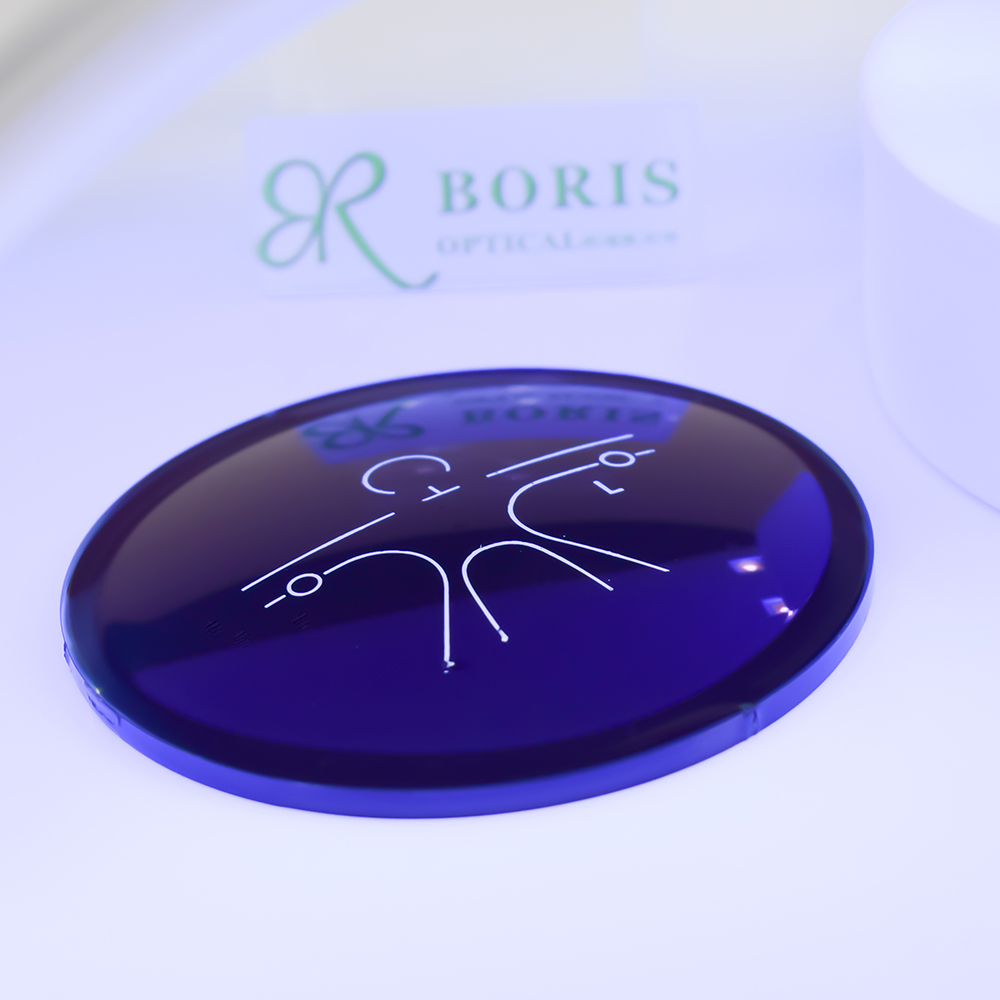
Hot New Products Photochromic Wraparound Sungla...
-
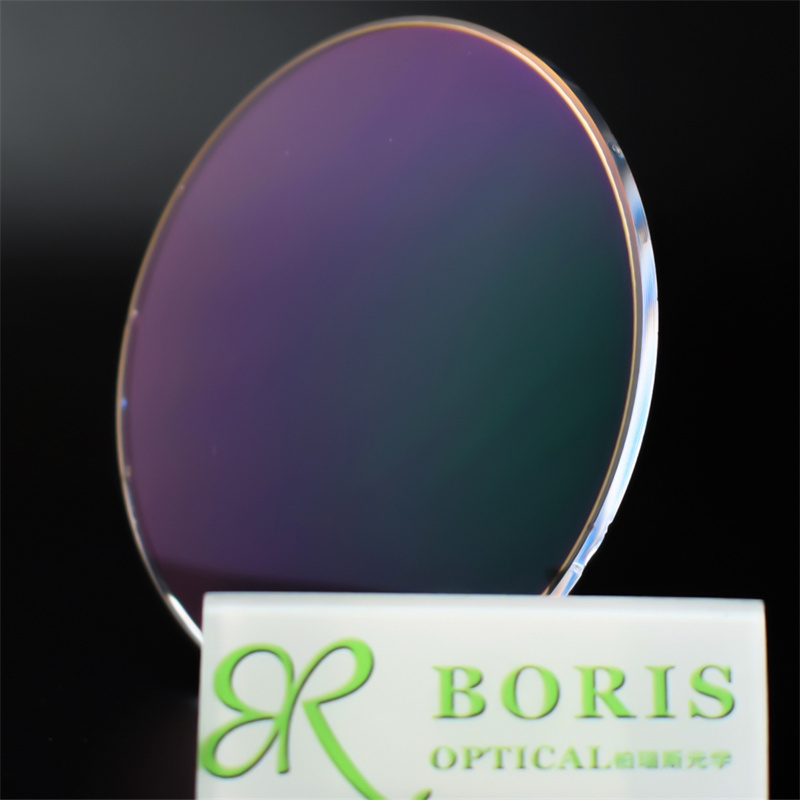
One of Hottest for Gradient Transition Lenses -...
-
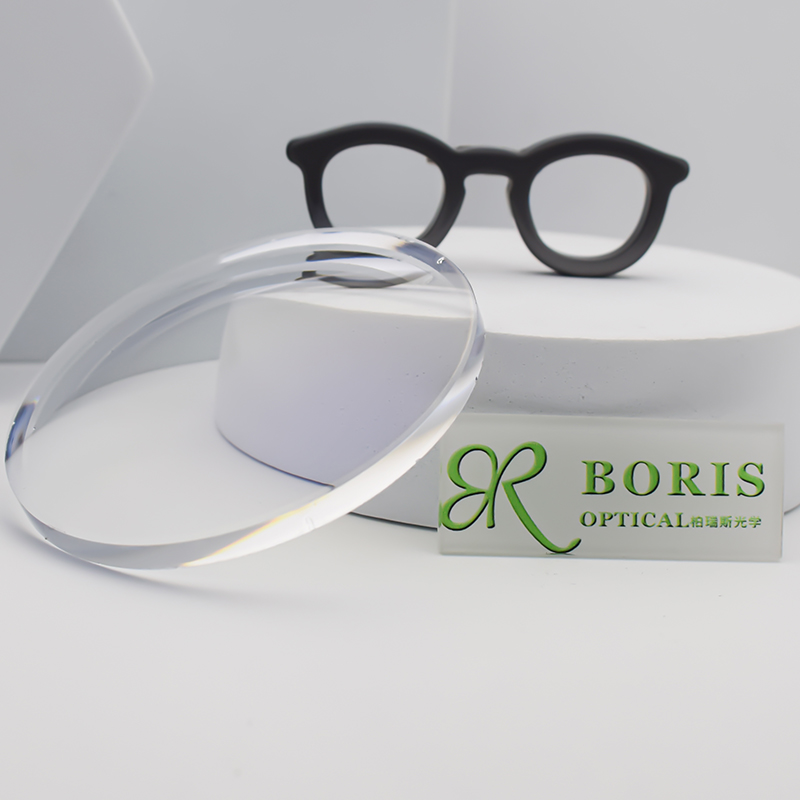
Wholesale Dealers of Progressive Spectacles - ...
-
Hot sale Prescription Sunglass Lenses - 1.71 S...
-
New Delivery for Single Vision Distance Glasses...
-
18 Years Factory Progressive Lens Reading Glass...